
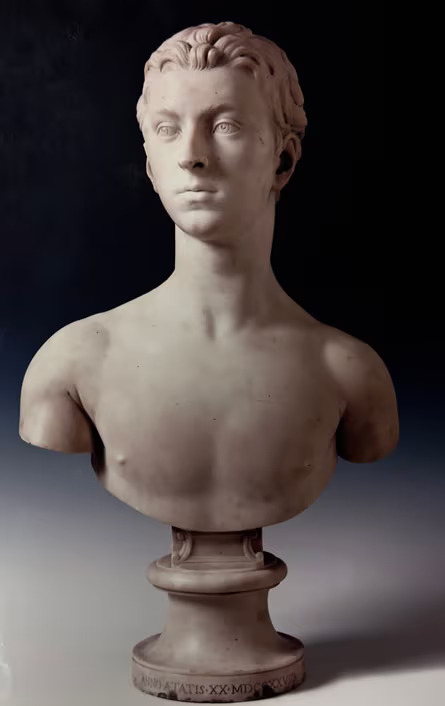
Bust of Sir John Gordon by Emdé Bouchardon
In late 2023, the Highland town of Invergordon faced an extraordinary decision: whether to sell an 18th-century marble bust by French master sculptor Edmé Bouchardon after an interested buyer offered £2.5 million for the work. The sculpture, Bust of Sir John Gordon, had been owned by the town since 1930, when it was purchased for just £5. Now recognized as a work of national importance, it has become the subject of a temporary UK export ban intended to keep it in Britain.
The export bar, imposed by the British government, prevents the sculpture from leaving the country while giving UK institutions or buyers time to match the recommended price of £3.1 million. Such bans are designed to safeguard culturally significant objects and to allow domestic purchasers to acquire them for public benefit.
The bust depicts Sir John Gordon, a member of the prominent Gordon family from which Invergordon takes its name. Created in 1728, the sculpture dates from Gordon’s early adulthood, when he was traveling through continental Europe as part of the Grand Tour. Gordon would later go on to serve as a Member of Parliament and as Secretary for Scotland to the Prince of Wales.
Its creator, Edmé Bouchardon, is widely regarded by art historians as one of the most important sculptors working in France during the reign of Louis XV. He played a crucial role in the transition away from the ornate excesses of Baroque and Rococo sculpture toward the clarity and restraint of early Neoclassicism. The Gordon bust is especially rare: it is one of only two known neoclassical sculptures by a French artist portraying a British subject.
Despite its importance, the sculpture’s value went largely unrecognized for decades. After being acquired by Invergordon in 1930, it fell into obscurity and was not rediscovered until 1998. Since then, it has been housed at the Inverness Museum, a short drive from the town.
The export ban was issued following a review by the Reviewing Committee on the Export of Works of Art and Objects of Cultural Interest (RCEWA), which operates under the Department for Culture, Media and Sport. The committee applies the Waverley Criteria, which assess whether an object is closely connected to British history, of outstanding aesthetic importance, or of exceptional significance for the study of art or history. In this case, the committee concluded that the bust met all three standards.
Committee member Stuart Lochhead noted that the sculpture “tells a unique story about Scotland, Jacobite intrigue, Rome as a cultural crucible during the Grand Tour, and a radical new portrait style.” These layered historical and artistic connections helped justify halting its export.
The ban will remain in force until April 8, 2026, allowing a three-month window for a UK buyer to raise the necessary funds, including taxes and the cost of producing a replica for Invergordon to retain. If the bust sells near the suggested price, it would rank among the most valuable Bouchardon works ever sold. The current record stands at €3 million, paid by the Louvre in 2012 for a 1736 bust sold at auction in Paris—underscoring just how remarkable this Scottish-held masterpiece has become.