
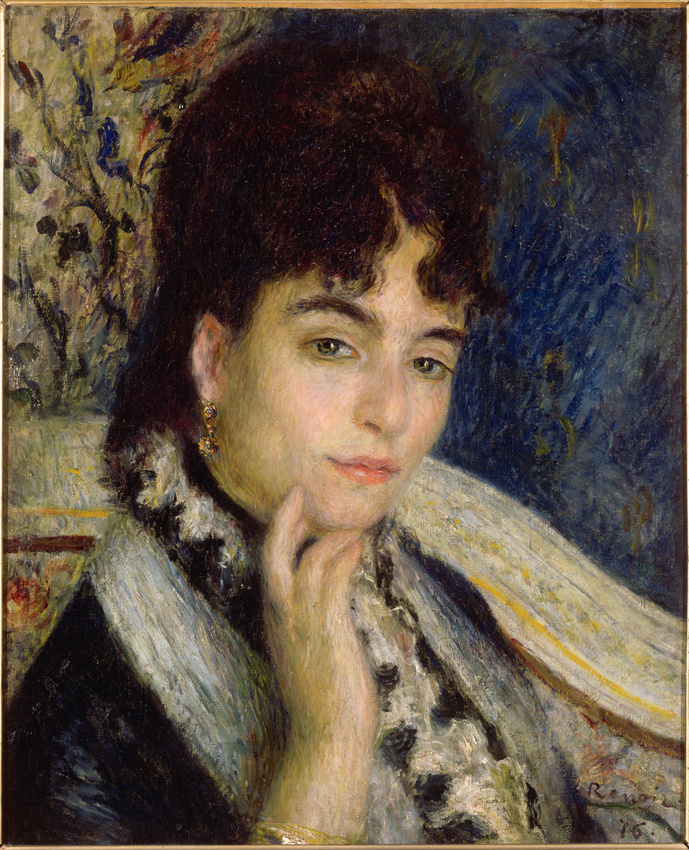
Portrait of Julia Allard by Pierre-Auguste Renoir
The Musée d’Orsay in Paris will dedicate a gallery to exhibiting works of art looted during the Second World War.
After the war, many European governments, including France, took it upon themselves to track down the owners of artworks and artifacts looted during the conflict. While most of the works were eventually reunited with their owners, many remained unclaimed. The French government was unable to track down the owners of 13,000 looted artworks and artifacts. Many of these were eventually sold off, but about 2,200 were given to French museums so their histories could be further researched. These works are known as the Musées Nationaux Récupération, or the National Museums Recovery (MNR). Currently, the Musée d’Orsay has about 225 of these works, mainly paintings by the Impressionists and other modern masters like Monet, Boudin, Cassatt, Degas, Pissarro, and Seurat.
Recently, the museum has decided to dedicate one of its galleries to displaying some of these works, not only to exhibit them to the public but also to share recent research with a wider audience. The exhibition and the corresponding research were made possible by a €1 million donation by the American Friends of the Musée d’Orsay. The museum has put a total of thirteen works on display in their one-room exhibition called À qui appartiennent ces œuvres?, or To Whom Do These Works Belong?. These works include Tête de femme by Thomas Couture, Frère et soeur devant la mer à Honfleur by Alfred Stevens, and Eternel printemps by Auguste Rodin. Probably the most well-known work is Portrait of Julia Allard by Pierre-Auguste Renoir. The subject was a French poet who, along with her husband, the French writer Alphonse Daudet, hosted literary salons in Paris, attended by Émile Zola and Guy de Maupassant. After Allard died in 1940, the portrait somehow found its way into the possession of Renou & Colle, an art dealer in the city’s 8th arrondissement, which sold it to the Cologne Museum. By 1950, the portrait was transported back to France and placed in the care of the Louvre. It was only in 1986 that it was transferred to the Musée d’Orsay.
The Musée d’Orsay hopes that this will lead to further discoveries and even further restitutions of these works. According to David Zivie, director of the culture ministry department responsible for researching and returning properties looted during the Holocaust, there are about thirty works in the MNR catalogue in French museums with active restitution cases that he is confident will result in their return to the rightful heirs.