
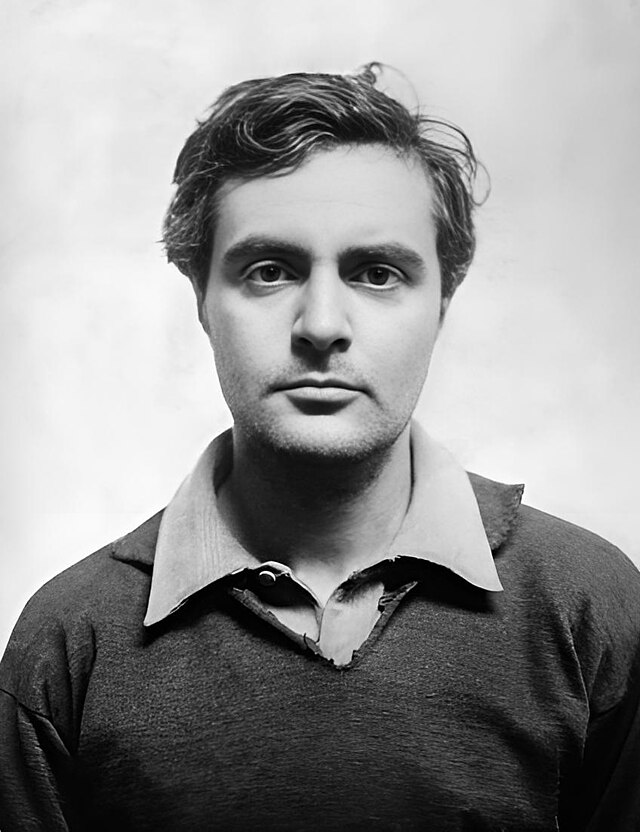
Amadeo Modigliani
After close to thirty years of work, art historian Marc Restellini’s monumental catalogue raisonné on Amadeo Modigliani is now set for publication.
Restellini is considered one of the art world’s most renowned specialists on Modigliani’s life and work. Since the 1990s, he has been working on a new catalogue raisonné, something which has been in great demand for quite some time. Ambrogio Ceroni published the most widely regarded Modigliani catalogue, last updated in 1972. Other catalogues by Osvaldo Patani and Christian Parisot have been released since then, but the Ceroni remains the benchmark. However, as scholarship on Modigliani has advanced, it has become increasingly apparent that Ceroni’s catalogue has some gaps. Since its publication, it has gone from a definitive work to better than nothing at all.
Restellini first embarked on the project at the recommendation of French art dealer Daniel Wildenstein. The Wildenstein Institute initially provided much of the funding for Restellini to perform his research. But in 2015, he formed his own organization, the Institut Restellini, through which he provides authentications.
Restellini and his team compiled the catalogue by recognizing the three steps needed to provide authentication. The first is documentary evidence, then stylistic analysis, and then finally scientific testing. To establish the standard against which all other work would be compared, Restellini’s team started with the collections of Jonas Netter and Paul Alexandre, who bought paintings directly from the artist while he was still alive. Through this process, the new catalogue has expanded from the 337 paintings in Ceroni’s work to 421 works. Restellini does acknowledge, however, that he excluded fifteen paintings that were previously featured in the Ceroni catalogue. This is either because the research team had doubts about the work’s authenticity or because they were unable to access the painting for analysis. A notable exclusion from the catalogue was Portrait of Beatrice Hastings Seated, created in 1915. Restellini claims that, while certainly painted by Modigliani, the painting was altered at some point between 1957 and its sale at Christie’s in 1997, likely due to heavy restoration. He therefore concluded that the changes caused it to lose its status as an original work by Modigliani.
A painting’s exclusion is not a definitive declaration that the work is a forgery. But fakes have been a consistent problem for Modigliani specialists and collectors. The artist died in 1920 at the age of 35 from tuberculosis. He left virtually no records or documents, and no central authority or foundation was established to manage his estate or provide authentications. Forgers such as Elmyr de Hory were therefore able to create works in the artist’s style with minimal resistance. Restellini has reportedly received death threats for his refusal to authenticate certain paintings. He also got into a bit of legal trouble with the Wildenstein family. In 2017, the France-based Wildenstein Institute transferred its archives to the Wildenstein Plattner Institute (WPI), its U.S.-based offshoot founded by Daniel Wildenstein’s son Guy. Consequently, in 2020, Restellini sued the WPI for allegedly keeping him from accessing his research materials. Though a New York judge eventually dismissed the WPI’s counterclaim, the suit was later settled out of court.
Next year, Restellini plans to organize an exhibition of Modigliani paintings that are absent from the Ceroni catalogue yet present in his. His Modigliani catalogue raisonné is available for pre-order, with the official release date set for May 16th. Pace Gallery in New York also plans on hosting a symposium called From Myth to Method: Reimagining the Catalogue Raisonné, Inside Restellini’s Modigliani. The catalogue, a six-volume set priced at $2,500, is being published by Yale University Press. Restellini says his next project will focus on Modigliani’s drawings.