
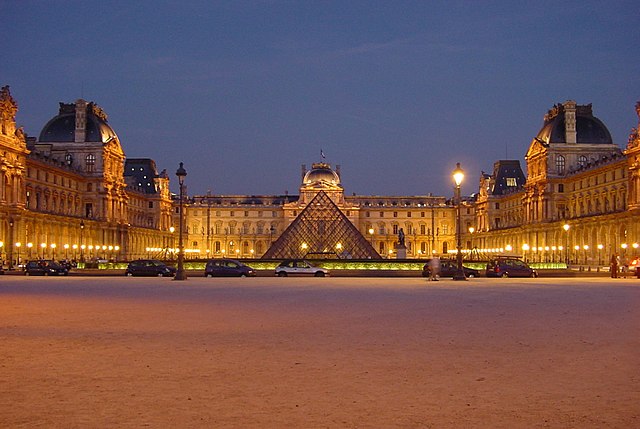
The Louvre
Three French museums have been robbed in the past month. This brings the total to at least nine museum thefts over the past year following a wave of high-profile break-ins, including the robbery at the Louvre. In response, French Culture Minister Catherine Pégard has unveiled a new national security plan designed to strengthen protections for the country’s cultural institutions.
The €30 million (or $35 million), three-year initiative outlines 33 measures to better safeguard France’s cultural heritage, from small local churches to major national museums. The plan includes a nationwide security audit to identify vulnerabilities, temporary relocation of high-risk artifacts, upgraded surveillance and alarm systems, specialized staff training, and closer coordination with law enforcement. Beyond preventing theft, the initiative also aims to improve the recovery of stolen objects and reduce the risk of their being damaged or destroyed after they are taken.
The government’s security audit has identified approximately 3,100 museums, monuments, and churches as high-risk sites, emphasizing the scale of the project. Yet the delegated funding raises questions about whether France is investing enough to adequately protect its cultural heritage. Spread across thousands of locations, the €30 million commitment appears modest when compared with the Louvre’s own €80 million (or $92 million) security modernization project.
The Louvre’s security overhaul, funded through a combination of public subsidies, museum revenue, and private donations, includes 100 new perimeter cameras, reinforced window barriers for vulnerable galleries, anti-vehicle barriers around exposed façades, a permanent on-site mobile police presence, and upgraded digital command systems, among other improvements. The contrast highlights the significant gap between the resources available to France’s flagship museum and those allocated to thousands of other institutions.
The recent rise in museum thefts has coincided with soaring gold and precious metal prices, fueling concerns that many stolen artifacts could be melted down before they can be recovered. In September 2025, thieves stole 13 pounds of gold nuggets worth an estimated €1.5 million (or $1.7 million) from France’s National Museum of Natural History. The following month, the Louvre suffered one of the country’s most significant museum thefts when eight pieces of the French Crown Jewels valued at €88 million (or $102 million) were stolen in just seven minutes. Each object was made primarily of precious metals and gemstones. On July 22nd of this year, the Louvre’s Apollo Gallery reopened, but without the remaining jewels.
The thefts have continued throughout 2026. On July 1st, thieves broke into the Centre archéologique du Montans and stole 40 Roman gold and silver coins valued at approximately €120K (or $134K). Four days later, robbers targeted the Musée Lalique, making off with 27 pieces of jewelry worth more than $4.5 million, crafted from gold, gemstones, enamel, and glass. Among the stolen works was the Femme-libellule ailes ouvertes pendant, which is primarily made of gold.
On July 27th, thieves stole the 2,500-year-old Celtic gold torque of the “Lady of Vix” from the Musée du Pays Châtillonnais. The ceremonial collar contains approximately 480 grams of 24-karat gold. Notably, the thieves ignored the centerpiece of the Vix Treasure, a 450-pound bronze vessel, suggesting a clear preference for portable objects made of precious metals. The robbery occurred despite the museum having spent €150K (or $172K) over the past two years upgrading gates, surveillance cameras, and other security measures.
The pattern is obvious. Rather than targeting paintings or large sculptures, thieves have overwhelmingly focused on jewelry, coins, and other precious metal artifacts that are both easier to transport and more difficult to trace once melted down. The trend also raises broader questions about museum security. If organized thieves increasingly view museums as easier targets than commercial jewelers, it may suggest that cultural institutions remain more vulnerable than businesses that routinely protect high-value merchandise.
There have been proposals to replace particularly vulnerable artifacts with high-quality replicas while storing the originals in secure facilities. Pégard has rejected that approach, stating that the display of authentic works remains central to France’s cultural mission. Instead, the government’s strategy will prioritize stronger security infrastructure, enhanced staff training, and improved coordination with law enforcement to keep original artifacts on public display while reducing the risk of future thefts.
By Madeleine Kent