
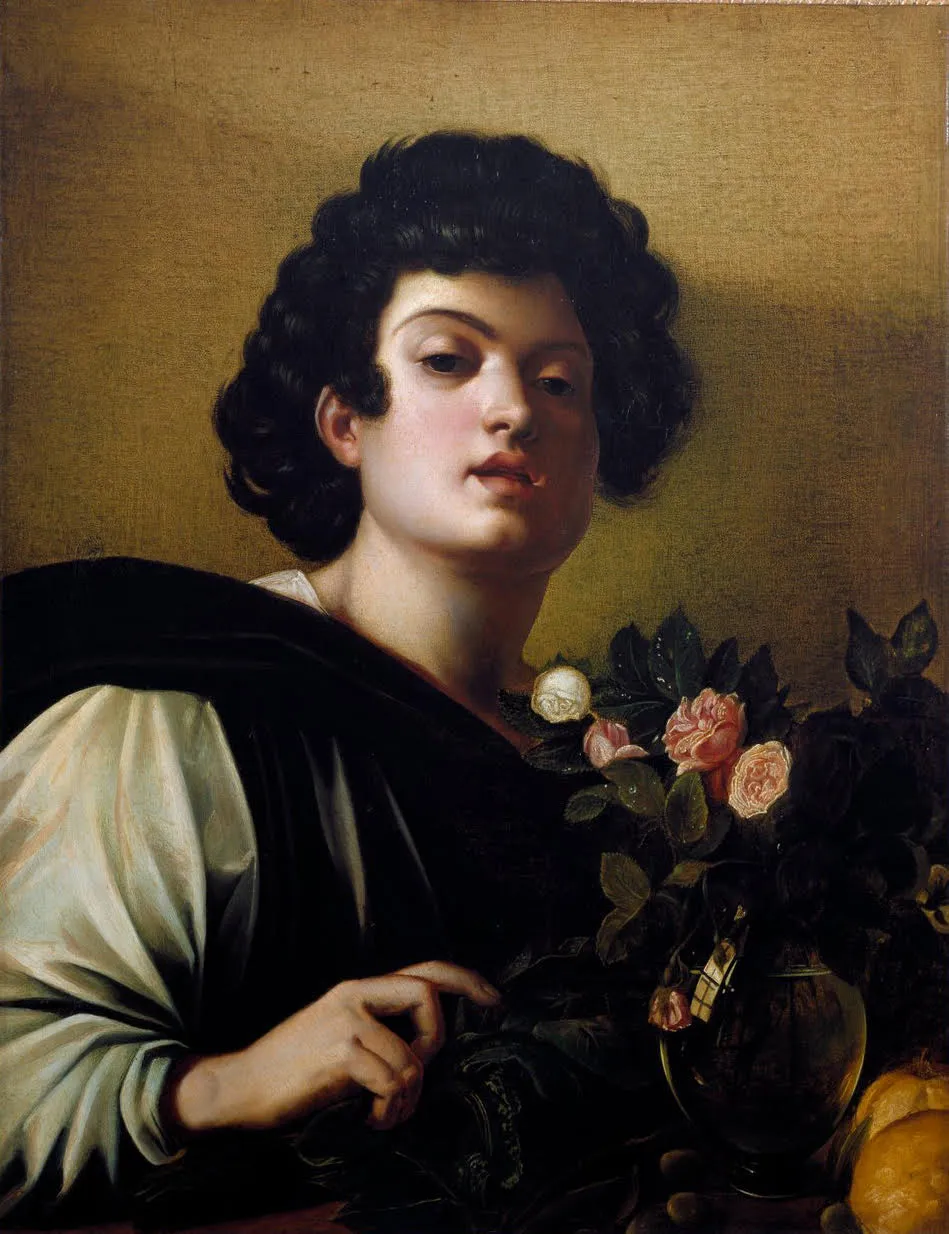
Copy of Young Man with a Vase of Roses by Caravaggio, part of the High Museum of Art collection
An Italian art historian has come forward to explain how a Caravaggio painting was found in a Paris gallery after being missing for nearly two hundred years.
Maria Cristina Terzaghi is a professor at Roma Tre University and is considered one of the world’s foremost experts on the life and work of Michelangelo Merisi da Caravaggio. She also served as one of the curators of the highly successful Palazzo Barberini exhibition dedicated to Caravaggio, which closed last year. In January 2025, the Spanish magazine Ars published an article about how a long-lost Caravaggio had possibly been rediscovered in the hands of a French family. Now, nearly two years later, Terzaghi has published an article in the Italian newspaper La Repubblica to provide a more in-depth explanation of how the painting was rediscovered.
Terzaghi believes that the painting, Young Man with a Vase of Roses, was painted by Caravaggio around 1596 or 1597. This was early in his career, after he moved from Lombardy to Rome. Until now, art historians have known of the painting only through four copies, with one of the best examples in the collection of Atlanta’s High Museum of Art. The original painting belonged to several notable people, including the renowned collector Cardinal Scipione Borghese. However, the painting went missing around 1831. The painting that Terzaghi believes to be the original resurfaced in 1909, when a Parisian bookseller put it up for auction. It was at this auction that the family of the current owners acquired the painting.
Some art historians speculate that Young Man with a Vase of Roses may be part of a series meant to represent the five senses by incorporating both still life and figure painting. The missing painting may represent smell, while the famous Caravaggio painting Young Man Bitten by a Lizard may also be part of the series, meant to represent touch. This was actually a rather common allegorical subject for Baroque painters, with others such as Michaelina Wautier being commissioned to create similar series.

Terzaghi claims the best evidence that this rediscovered painting is the original is its quality, especially compared with the pre-existing copies. Terzaghi wrote in La Repubblica, “The extraordinary quality of the painting leaves no doubt about its attribution to Caravaggio. This is evident not only in the compositional invention – a magical harmony of youth, embodied by the boy in his white shirt and the budding roses – but also in the remarkable rendering of his face, his moist eyes, the shifting whites of his shirt and the magnificent still life.” Terzaghi further commented that the painting may be indicative of the theatricality of the work from the artist’s later life. She calls it a “missing link between the Caravaggio as he was and the artist he would become. In the sorrow of fleeting youth and the sting of love, we can already glimpse the drama of Caravaggio‘s mature work, in which he would be compelled to confront the end of things and question the very meaning of reality and life itself.”