

Un Buveur (The Drinker) by Willem Cornelisz Duyster
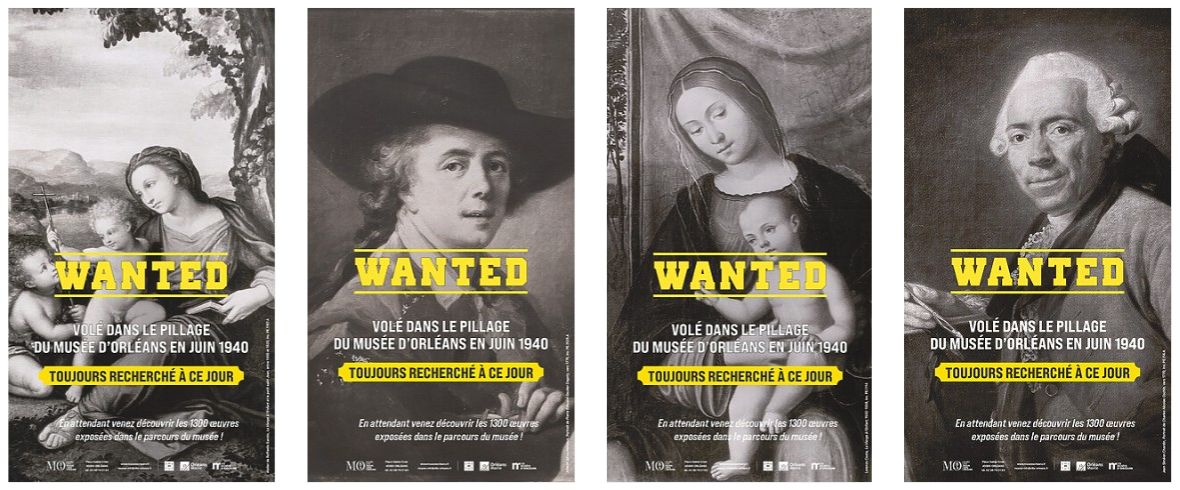
A French museum tracked down a lost painting using a peculiar strategy: by putting up Old West-style wanted posters.
In 1940, Willem Cornelisz Duyster’s painting Un Buveur (The Drinker) was stolen from the Musée Paul Fourché along with several hundred other artworks. According to the museum, many took advantage of the chaos brought by Germany’s invasion of France that year to ransack French cultural institutions. Located in the city of Orléans, the Musée Paul Fourché is considered an annex of the city’s Musée des Beaux-Arts. This annex is dedicated to the collection of its namesake, who bequeathed several hundred artworks to the museum between 1908 and 1922.
The artist, Duyster, was a seventeenth-century Dutch painter who, after a brief stint as a portraitist, became somewhat successful with his “merry company” paintings. This was a specific variety of genre painting in which a group of people is shown enjoying themselves, often seated around a table or otherwise situated in a tavern or inn. The mood is often jovial, with the drinking and pipe smoking bringing out the subjects’ rosy-cheeked grins. The people portrayed in these works are nearly always men, and when women are present, it is somewhat implied that they are sex workers hired to partake in the revelry. Duyster and a small handful of contemporaries specialized in a very specific form of merry company painting called cortegaarddje in Dutch, meaning “guardroom scenes.” This refers to his subjects being primarily soldiers as opposed to the standard tavern attendees.

Many of the works stolen from the museum in 1940 remain missing after more than eight decades. To help track them down, Olivia Voisin, the director of the Musée des Beaux-Arts, initiated a campaign to raise awareness of these lost works. The museum created wanted posters reminiscent of the Old West, featuring black-and-white images of the works and all-caps lettering. This campaign has encouraged some to spend their own time tracking down the stolen art. According to the museum, one Orléans resident saw the image of Duyster’s Buveur on a poster and found a similar-looking painting in a catalogue from the Gloggner auction house in Lucerne, Switzerland. Had the museum not intervened, the painting would have crossed the block at Gloggner’s October 17th sale.
According to provenance research by Gloggner specialists, the painting was likely taken to Switzerland during or after the Second World War, as it entered the collection of Charles Kiefer-Hablitzel, a Swiss industrialist who lived at Dreilinden Castle in Lucerne until his death in 1947. From there, the painting traveled around Europe, from a Swiss museum, an art gallery in Cologne, and Christie’s London. The individual who consigned it to Gloggner purchased it at Phillips London in 1990. The auction house specialists could not find any details about the Musée Paul Fourché’s ownership of the work, nor its theft in 1940.
After the museum contacted Gloggner, the auction house pulled the Duyster from the sale. The painting’s consignor immediately agreed to restitution. Gloggner initially estimated the work to sell for at least 1,900 Swiss francs (or about $2,300). However, after the painting is fully restored, Voisin has placed its value at closer to €25K to €30K (or $28K to $33.6K).
Un Buveur is currently in the possession of French customs officials and will soon be transported back to Orléans. But many other works have remained missing, including works by Hans Holbein, Édouard Manet, Anthony van Dyck, and even from the studio of Raphael.