
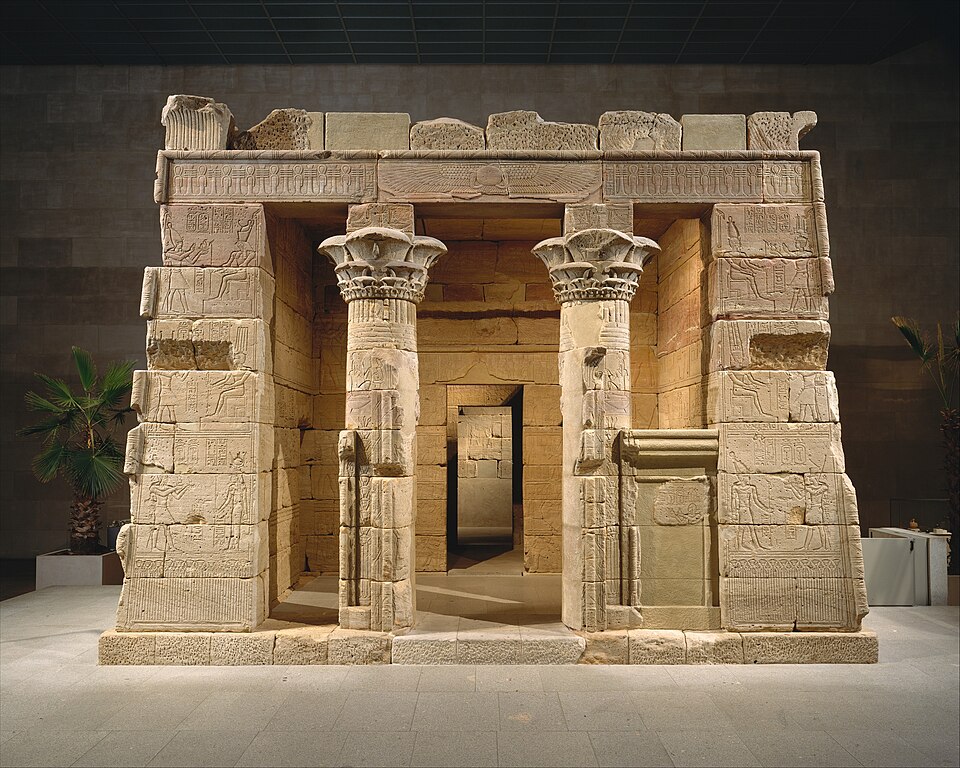
The Temple of Dendur at the Metropolitan Museum of Art
Last Friday, the Metropolitan Museum of Art in New York opened a small new exhibition that places two very different artworks in the same space: several sculptures by the twentieth-century Swiss master Alberto Giacometti and the museum’s Roman-era Egyptian temple.
Giacometti in the Temple of Dendur explores the two-thousand-year dialogue between ancient Egyptian art and Giacometti’s work. Alongside non-Western art, ancient art exercised a substantial influence on modernism. Ancient reliefs excavated just outside Seville became as great an inspiration for Picasso’s Les Demoiselles d’Avignon as African masks. This becomes apparent for Giacometti’s work in the presence of an ancient temple complex.
The seventeen bronze and plaster sculptures on display, all but three of them being loans from the Fondation Giacometti in Paris, have been placed around the temple in the Metropolitan Museum’s Egyptian wing. While living and working in Italy and France, Giacometti felt drawn to ancient Egyptian sculpture, frequently visiting museums to see examples. The artist’s colleagues also linked his work to Egyptian sculpture, with Jean Genet comparing some of Giacometti’s work to sculptures of Osiris at the Louvre. The Met curators’ placement of these works in relation to the temple makes the influence of ancient art more apparent to the casual museum-goer. Placing a work from the artist’s Walking Woman series between the columns of the main temple entrance might evoke the aesthetics of Fourth Dynasty sculpture. In fact, this influence is so apparent that museum curators did not necessarily need to place Giacometti’s works in the temple complex. They could have just as easily placed the sculptures in the ancient Greek wing and conveyed the same message. A four-thousand-year-old marble figure from the Cyclades islands could easily be mistaken for a twentieth-century work of modernist sculpture.
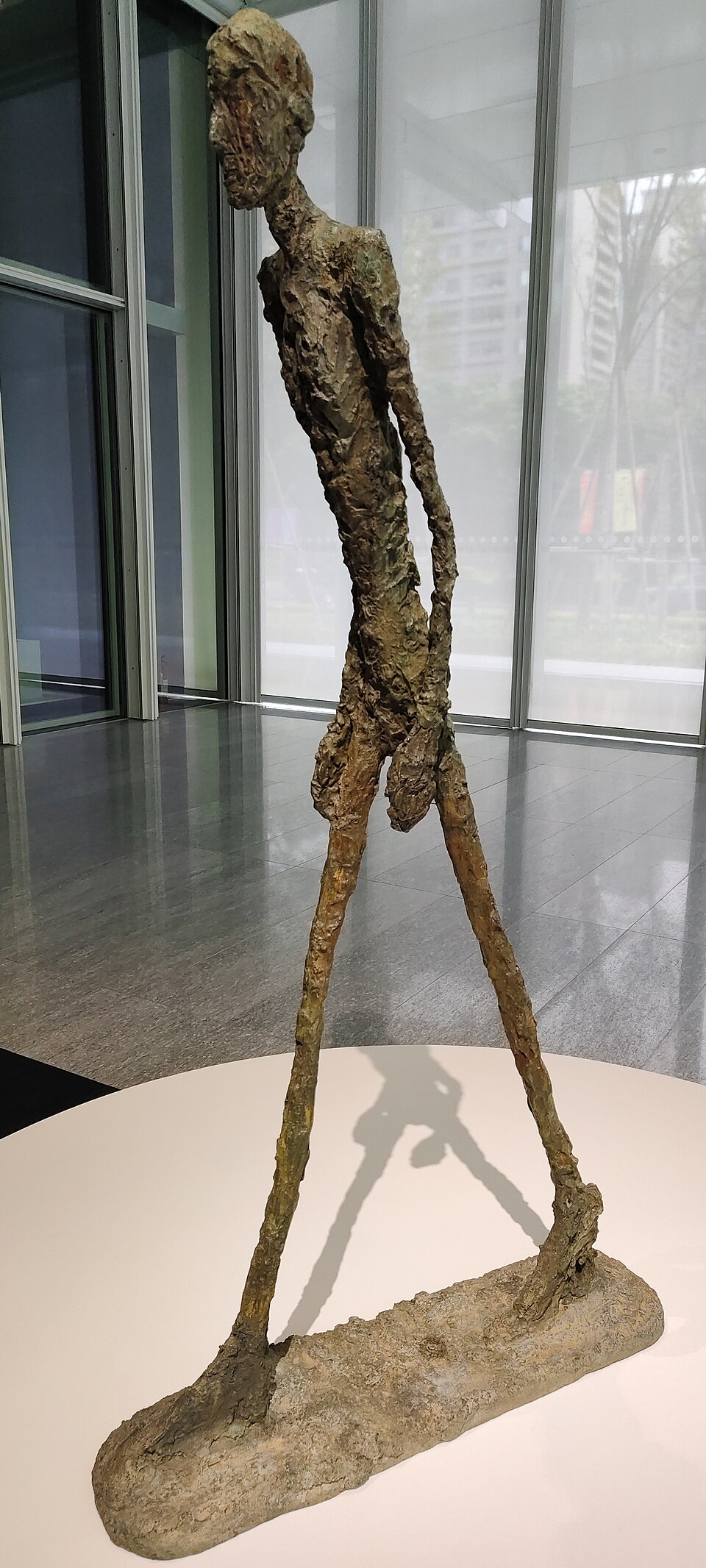
An example from Giacometti’s Walking Man series, one of which is on display at the Temple of Dendur
Writing for ArtNews, Ben Davis further notes that the sculptures’ placement alongside the ancient structures not only highlights this dialogue but also shapes our interpretation of Giacometti’s work. Davis writes that the temple as a background “does bring out a different side of Giacometti.” When isolated, his work reflects “fragility and alienation”, while the temple and many examples of ancient art evoke “total solidity”, carrying an “eternal presence.” This is consistent with curators becoming more confident in blurring boundaries and drawing connections between disparate concepts. This is most prevalent in the recent rehang of the Met’s European painting galleries. But while Met curators could have gotten their point across with any kind of ancient art, the Temple of Dendur is one of the most popular attractions at the Metropolitan Museum of Art, making it an ideal place for visitors to view a small exhibition such as this.
The temple complex dates to the first century BCE and was commissioned by Augustus, the first emperor of Rome. In the 1960s, Egypt, under the presidency of Gamal Abdel Nasser, embarked on a campaign to become more self-sufficient, including the construction of the Aswan High Dam. One of the consequences of the dam’s construction was the creation of Lake Nasser, formed by the dammed river flooding a 2,000-square-mile area in southern Egypt. Project planners realized that this reservoir would flood dozens of archaeological sites and destroy countless artifacts. To prevent this, an international effort successfully disassembled and relocated many of the temples, tombs, and other structures that would have been affected by the flooding. The salvaged sites include the temples of Abu Simbel and Philae.
While most of the archaeological sites were moved to higher ground near their original locations, the Egyptian government also gifted several small temples to countries that provided significant aid. The Temple of Debod, for example, was gifted to Spain, which erected it in a park in Madrid. The Temple of Taffeh was gifted to the Netherlands and can now be seen at the National Antiquities Museum in Leiden. And, in 1965, the Temple of Dendur was gifted to the United States. President Lyndon Johnson chose to give the structure to the Metropolitan Museum, which added a large, purpose-built wing for the temple, which opened in 1978.
Though a small exhibition, many hope that Giacometti in the Temple of Dendur is an indication of how the museum may curate its new modern and contemporary wing, set to open in 2030. Giacometti in the Temple of Dendur will be open to the public through September 8th.