
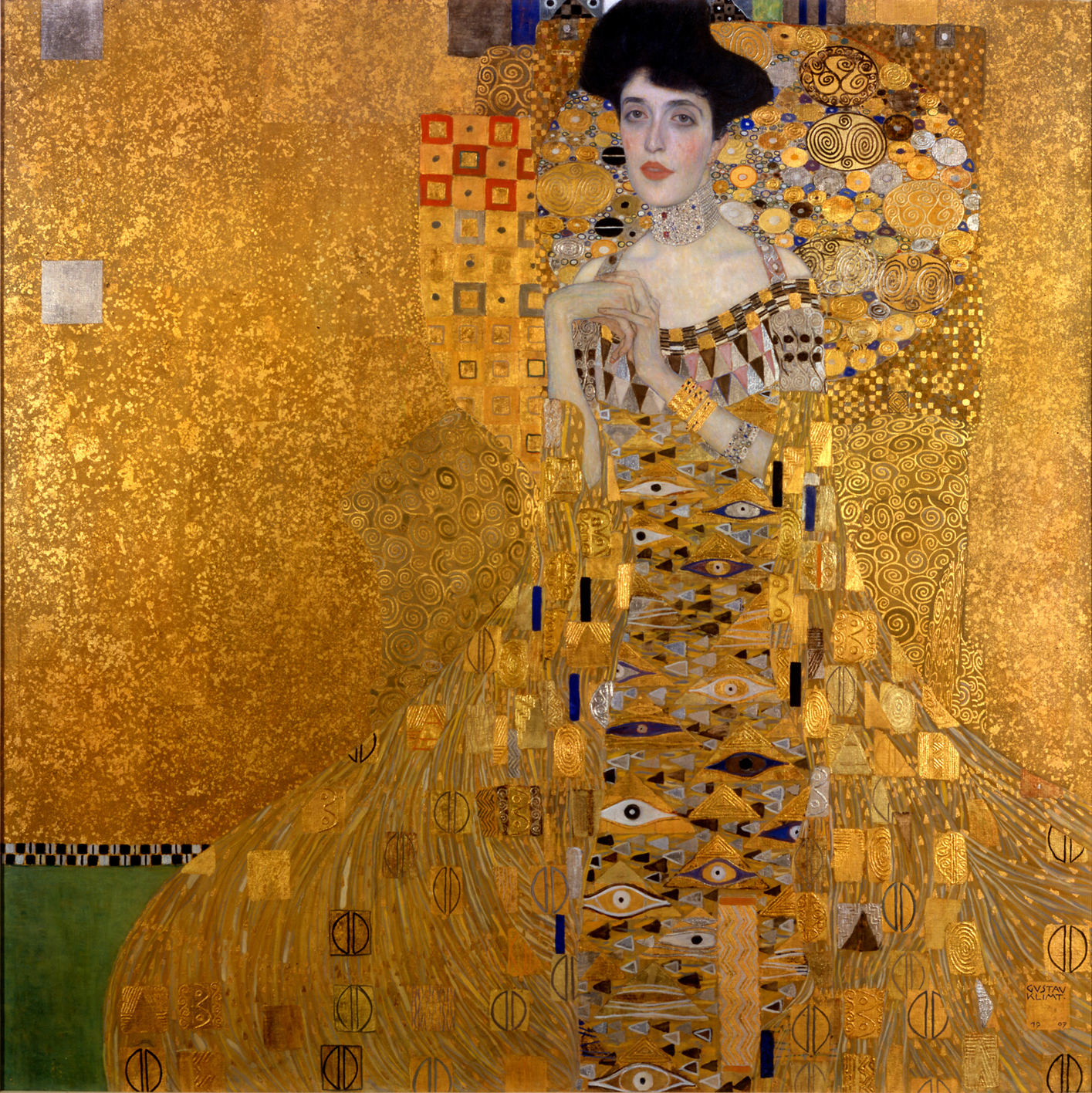
Portrait of Adele Bloch-Bauer I by Gustav Klimt
The Neue Galerie, one of the top attractions on New York’s Museum Mile, has announced a merger with the Metropolitan Museum of Art.
Founded in 2001 by art collector and philanthropist Ronald Lauder, the Neue Galerie was created to showcase early twentieth-century Austrian and German art and design. Lauder, the son of Estée and Joseph Lauder, founders of the Estée Lauder Companies, spent decades building an important collection of Austrian and German works before partnering with dealer and curator Serge Sabarsky to establish the museum. Together, they envisioned an intimate institution modeled after collector-focused museums such as the Frick Collection and the Morgan Library, where art, design, and decorative objects could be experienced in a domestic and highly personal setting.
The museum opened in a historic Fifth Avenue mansion that once belonged to industrialist William Starr Miller, further reinforcing its atmosphere as a private collector’s residence rather than a traditional large-scale museum. Its permanent collection includes many works by Egon Schiele, Ernst Ludwig Kirchner, Franz Marc, and Max Beckmann, among others. But probably the pride of the permanent collection is the many works by Gustav Klimt, most famously Portrait of Adele Bloch-Bauer I. This painting was the subject of a famous restitution case that forced the Belvedere Gallery in Vienna to return it to the descendants of the work’s subject. The portrait and its later restitution became the focus of a Hollywood production starring Helen Mirren and Ryan Reynolds. Lauder has referred to the painting as “our Mona Lisa”.
Met director Max Hollein has commented that the merger will greatly augment the museum’s modern German and Austrian art sections, an area where their own collection is somewhat lacking. Furthermore, the Neue Galerie, as a Met satellite location, will have access to the Metropolitan Museum’s inventories and other resources. However, given its importance and association with the Neue Galerie, Portrait of Adele Bloch-Bauer I will remain at the 86th Street location.
But the merger is not just a deal between two institutions. The museums’ respective heads have a previous history. Lauder briefly served as ambassador to Austria under Ronald Reagan. There, he befriended the architect Hans Hollein, Max Hollein’s father. Hollein went into art history and museum administration, receiving his first executive role as director of the Schirn Kunsthalle in Frankfurt in 2001, the same year Lauder helped found the Neue Galerie. Before taking up the directorship of the Met, Hollein sat on the Neue Galerie’s board and provided invaluable consultation on museum governance.
The Met plans to establish a $200 million endowment to fund operations at the Neue Galerie. Many of the museum’s trustees have already contributed, with 80% of the goal already met. Lauder has expressed his wish that the museum, though under the umbrella of the Metropolitan Museum, will retain its distinct character and operational autonomy. He has cited the Met’s operation of the Cloisters as an aspirational example.
Lauder and his daughter, Aarin Lauder Zinterhofer, will also be donating several works from their private collections, including Gustav Klimt’s unfinished painting Die Tänzerin. This is not the first time that Lauder has donated to the Met. In addition to his art collection, he has assembled one of the world’s largest private collections of medieval and Renaissance arms and armor. In 2020, he gifted ninety-one pieces to the Met, and the museum’s arms and armor galleries were subsequently named in his honor. The merger between the two institutions will be finalized by 2028.
Ronald Lauder’s brother, Leonard Lauder, also became one of the most influential art collectors of his generation. Works from his collection drew significant attention at a recent Sotheby’s sale, which featured Portrait of Elisabeth Lederer, the most expensive work of modern art ever to sell at auction.