
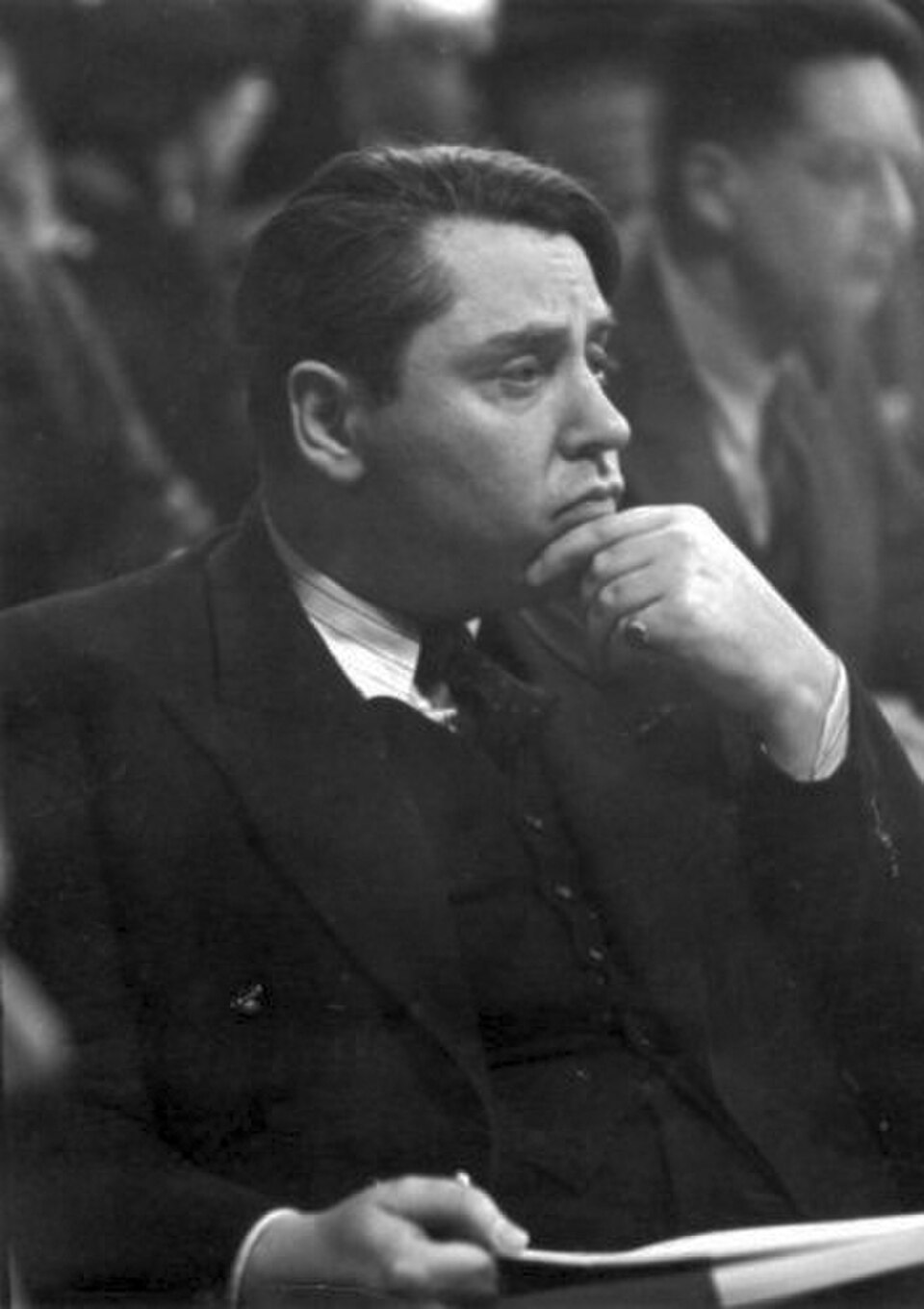
Jacques Goudstikker
A looted painting has been discovered in the possession of the descendants of a Dutch man who collaborated with the Nazis during the occupation of the Netherlands.
Toon Kelder was a Dutch painter who lived and worked in the Hague. His style was clearly inspired by the various strains of modernism emerging from Paris in the early twentieth century. His paintings have little bits of Matisse, Picasso, Chagall, and others interwoven throughout. His Portrait of a Young Girl was owned by Jacques Goudstikker, one of the most esteemed art dealers in the Netherlands, specializing in Old Master paintings. Goudstikker, being Jewish, fled the country when the Nazis invaded in 1940. He left behind much of his property, including a 1,200-piece art collection, which the Nazis subsequently looted. His collection included works by Anthony van Dyck, Jan Steen, Salomon van Ruysdael, Filippino Lippi, David Teniers the Younger, and many others. In 2006, his descendants successfully secured a ruling from the Dutch government ordering the restitution of over two hundred paintings to the family. Some of these works had been at the Mauritshuis, the Rijksmuseum, the Van Gogh Museum, and other institutions.
After the Nazi occupation of the Netherlands began, Hermann Göring forced Goudstikker’s business to sell all the works in their possession to him for 2 million Dutch guilders, roughly equivalent to $20.9 million in 2026. While this was a good sum of money, it was nowhere near the market value of the dealership’s entire inventory. When the Nazi authorities first got their hands on Goudstikker’s private collection, many of the works were auctioned off. The Kelder portrait eventually found its way into the possession of Hendrik Seyffardt, a Dutch general who supported and collaborated with the Nazis. He was a high-ranking officer in the government of Anton Mussert, head of the Nazis’ puppet government in the Netherlands. Seyffardt also spearheaded the formation of the Vrijwilligerslegioen, or the Volunteer Legion, a Dutch SS unit later sent to the Eastern Front. In 1943, he was assassinated by the Dutch resistance group CS-6.
The rediscovery of the Kelder portrait is partly the work of renowned Dutch art detective Arthur Brand, known for his role in recovering stolen works by Van Gogh and Brueghel the Younger. An anonymous member of Seyffardt’s family approached Brand, claiming that the painting is currently located in the house of the collaborator’s granddaughter in Utrecht. When Brand examined the painting, he found the Goudstikker label and an inventory number that corresponded to the 1940 auction catalogue in which Seyffardt likely acquired the work. The anonymous family member commented, “I feel deep shame about the family past and am furious about the years of silence. The painting must return to the Jewish rightful heirs.”
Seyffardt’s descendants have since acknowledged that they own the painting, but denied knowing that it was previously looted during the Nazi occupation. However, according to the anonymous family member, another relative told them they knew the work had been looted, describing it as “unsellable”. Brand has called this “the most bizarre case of my entire career […]. For decades, the family, who of course bear no personal guilt for Seyffardt’s own crimes, had the opportunity to do the right thing and return this painting. They chose not to.”
As far as restitution goes, there are very few legal avenues to pursue. The statute of limitations in the Netherlands has since elapsed, so the government cannot compel Seyffardt’s descendants to return the painting. The Restitutions Committee, established by the Dutch state in 2001, cannot order the painting’s return either, as its authority is limited to works housed in public collections. However, it seems that the family will not have to be forced to turn over the painting. Brand announced on his social media on Monday that the work had been voluntarily turned over to his possession.