
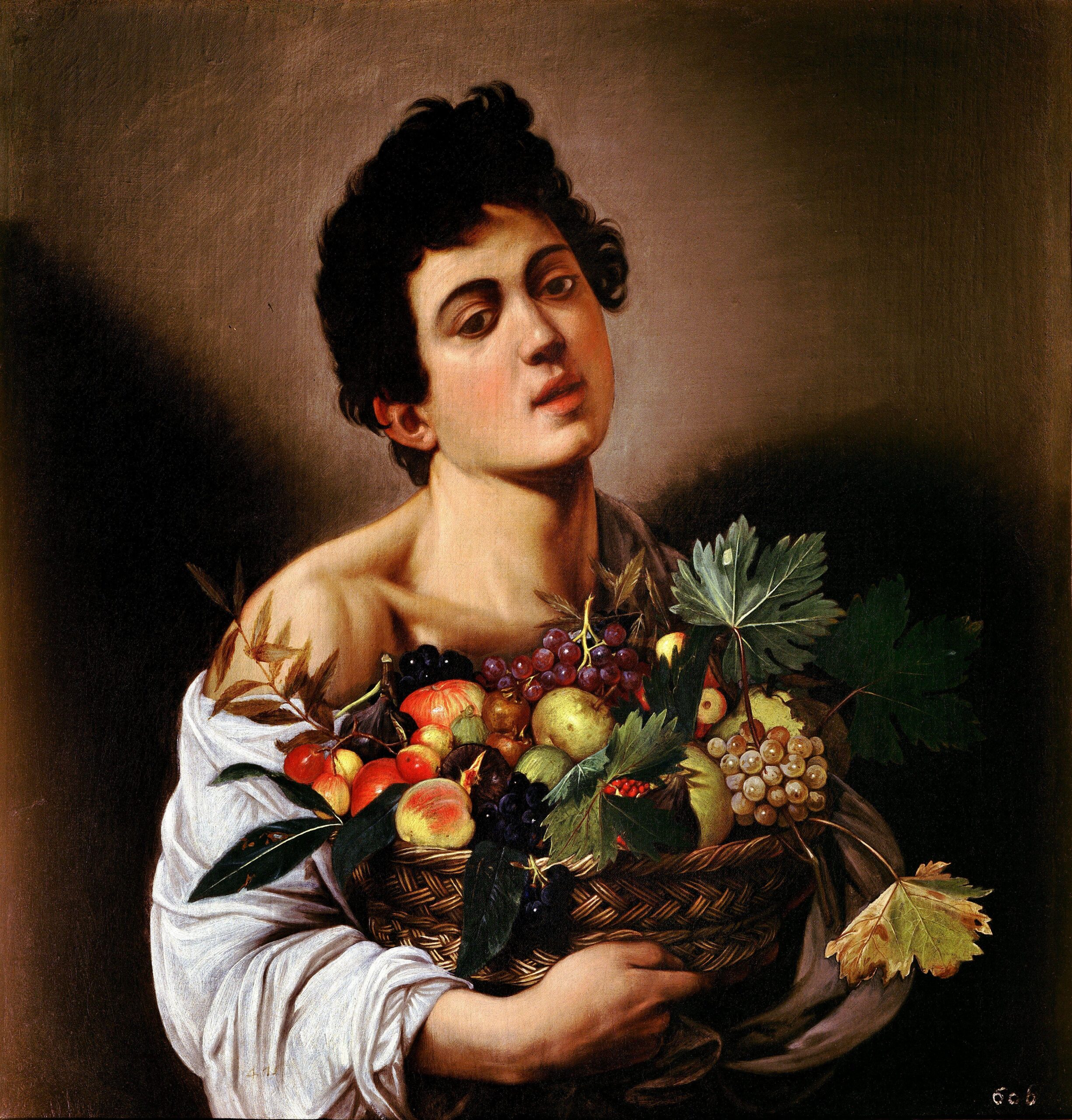
Boy with a Basket of Fruit by Michelangelo da Caravaggio
New York museums often put on incredible exhibitions, securing loans from institutions worldwide. However, it is very rare for a museum to receive an iconic masterwork. This distinction usually happens only once a year. Last year, the Hamburger Kunsthalle loaned Wanderer Above the Sea of Fog to the Metropolitan Museum for its Caspar David Friedrich retrospective.

It is even rarer for a relatively small museum to secure a similar loan. The Morgan Library made that happen when, on Friday, January 16th, it opened a small exhibition dedicated to Michelangelo da Caravaggio’s first masterpiece, Boy with a Basket of Fruit.
If you’re accustomed to exhibitions at the Met or the MoMA, the Morgan Library may feel underwhelming in scale. Its temporary exhibitions are small, consisting of one or two rooms in what was once J.P. Morgan’s Madison Avenue mansion. The Caravaggio exhibition occupies a single room, with fewer than a dozen works on display.
Still, the size can be deceiving. The curators tell a compelling story about the history of European painting. They lay out the influences behind Caravaggio’s creation of Boy with a Basket of Fruit. Those influences, in turn, shaped the trajectory of Baroque painting.
The curators begin by examining the state of painting during Caravaggio’s early career. They do this through Girl with Cherries, a loan from the Metropolitan Museum attributed to Marco d’Oggiono, a student of Leonardo da Vinci. The painting shows Leonardo’s legacy, particularly his emphasis on naturalism. It also reflects a preference for ambiguity. Viewers cannot easily tell whether the figure represents a girl with cherries or Pomona, the Roman goddess of fruit.
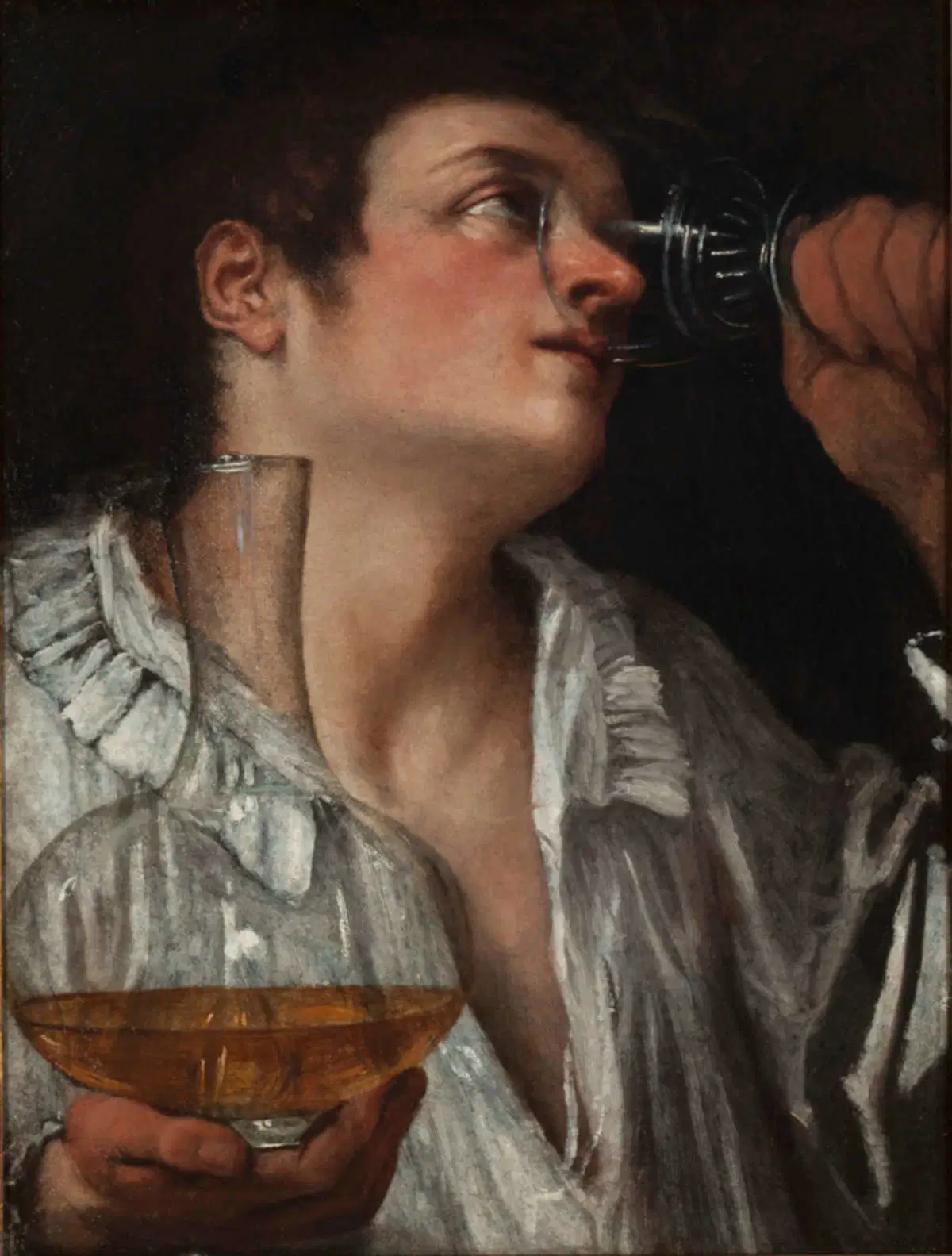
A Boy Drinking by Annibale Carracci
Caravaggio grew up twenty-five miles east of Milan, where Leonardo spent significant time. As a result, Caravaggio likely received instruction grounded in Leonardo’s naturalistic style.
Leonardo, however, was not Caravaggio’s only influence. The Bolognese painter Annibale Carracci also shaped the young artist, especially through his choice of subject. Carracci became known for depicting everyday life and ordinary people. Works such as The Beaneater and The Fishing Scene illustrate this approach.


At the Morgan, the curators highlight that influence through Carracci’s 1583 painting, A Boy Drinking. The museum is exhibiting the work there for the first time.
Boy with a Basket of Fruit was the first painting Caravaggio created after moving from northern Italy to Rome in 1593. John Marciari, the exhibition’s primary curator, calls it “a turning point in Italian painting.” In the work, Caravaggio synthesizes Leonardo’s naturalism with Carracci’s interest in common subjects.
The figure is neither saint nor deity, nor does he serve an allegorical role. He is simply an artist’s model. Caravaggio renders the boy’s features and the fruit with painstaking detail. He even includes defects. The fruit shows dark marks, and the leaves on the right are yellow and wither.
Caravaggio also preferred to paint directly on the canvas. He avoided preparatory drawings and worked from life. In doing so, he pushed naturalistic painting to its limits. This warts-and-all approach was uncommon at the time. As the Morgan curators note, his paintings “are less a demonstration of the correct practice of careful study and more a direct demonstration of the painter’s craft.”
The remaining half of the room features works that illustrate Caravaggio’s impact on Italian painting. Later artists who adopted his style, known as the Caravaggisti, emphasized imperfections in their subjects. In doing so, they revealed what the exhibition calls “the fiction of art.”
Works such as A Monk Sleeping against a Pile of Books by Rutilio Manetti and Basket of Fruit by Bartolomeo Cavarozzi show a clear break from the academic precision of Renaissance and Mannerist traditions. The combination of naturalism and ordinary subject matter reshaped seventeenth-century painting. It also helped establish still life as a genre in its own right.

Even artists unaware of Caravaggio’s working methods adopted his visual language. Many still created works in his style.
To conclude the exhibition, the curators display a sketch by Gian Lorenzo Bernini of Cardinal Scipione Borghese, the painting’s eventual owner. Borghese, the nephew of Pope Paul V, became a prolific collector in the early seventeenth century. His collection later formed the foundation of the Villa Borghese in Rome, which loaned Boy with a Basket of Fruit to the Morgan.

The sketch feels dynamic. It reflects Bernini’s preference for having his subjects move and speak as he worked. In that sense, it reconciles Caravaggio’s direct engagement with life and the Renaissance tradition of preparatory drawing.
Overall, the one-room exhibition offers a concise and accessible experience. It clearly explains why Caravaggio remains a central figure in art history. Boy with a Basket of Fruit will remain on view at the Morgan Library through April 19th.