
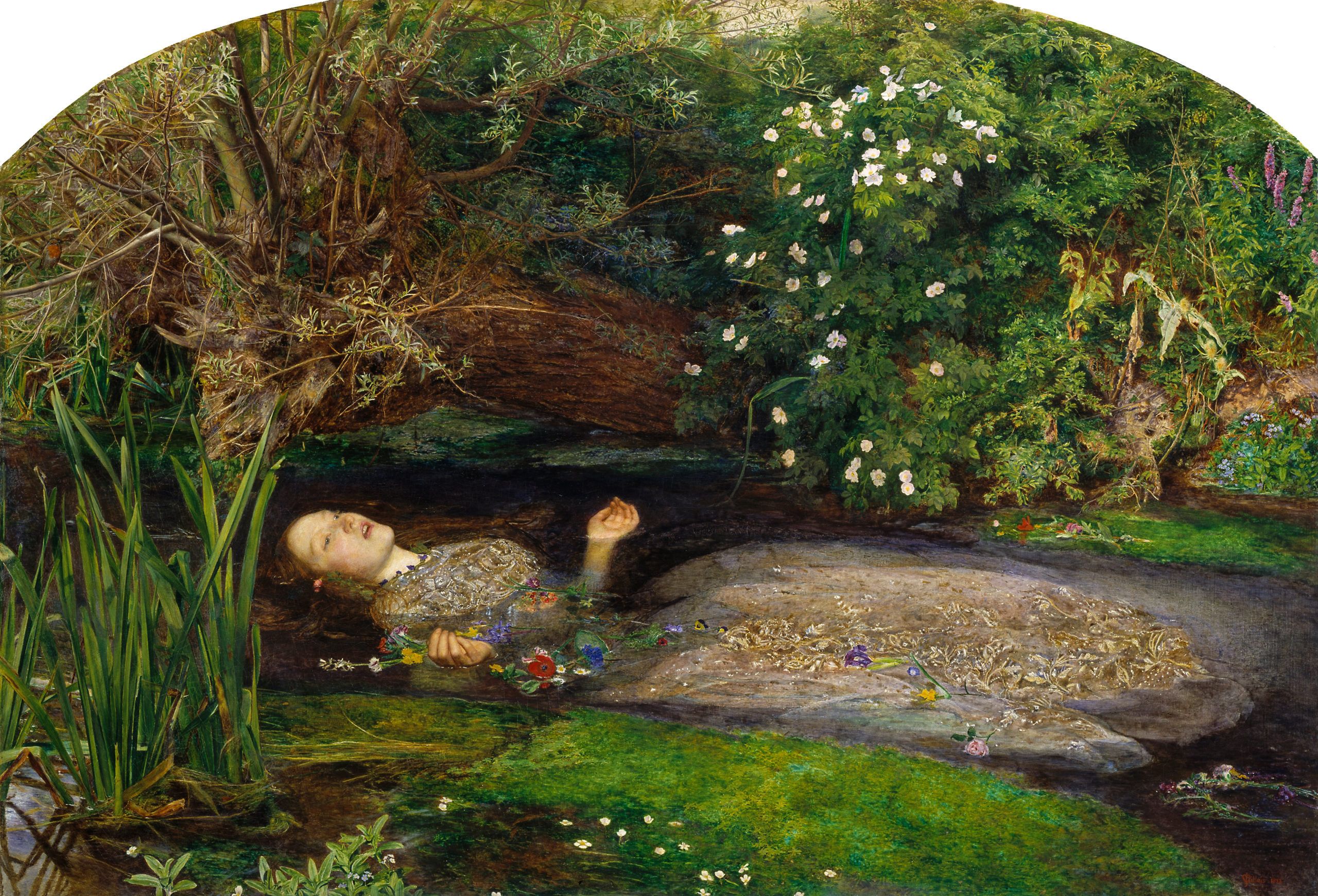
Ophelia by John Everett Millais
Taylor Swift recently released the music video for “The Fate of Ophelia”, her new single from the album The Life of a Showgirl. Many eagle-eyed viewers have also picked up on the art historical references in the video.
The lyrics of the song “The Fate of Ophelia” are addressed to an unnamed man, likely Swift’s fiancé, Kansas City Chiefs tight end Travis Kelce. The song’s chorus relates how this man “dug me out of my grave and saved my heart from the fate of Ophelia.” This line is a reference to the Shakespeare character of the same name, who is the main love interest of Hamlet. In the play, Ophelia is manipulated by the men in her life, like her father, Polonius, and, of course, Prince Hamlet, to serve their own ends. She begins to speak only in riddles, indicating an unstable mental state brought on by grief. She dies after falling off a willow branch into a stream, where she drowns, but it is also implied that she intentionally drowned herself. Even today, Ophelia is a symbol of innocence being destroyed by heartbreak. In writing that she has been saved from the fate of Ophelia, Swift is saying that she thankfully has people in her life who will not mistreat her, thus preventing her from falling into despair. While many have grabbed onto John Everett Millais’s 1852 painting Ophelia as a source of inspiration for the song and the video, Swift recreated a different painting in the opening shot. The music video opens with Swift lying in a sort of diorama modeled after the Friedrich Heyser painting Ophelia, created in 1900. Similar to the Millais painting, Heyser depicts the character of Ophelia in the brook, acquiescing and embracing death, surrounded by greenery and flowers. Swift does not overtly reference the Millais painting until the very end, when she lies in a half-full bathtub. This image also serves as the cover art for the album. However, it also references how Millais created the work by having his model, the artist Elizabeth Siddal, lie in a bathtub in his studio for hours.
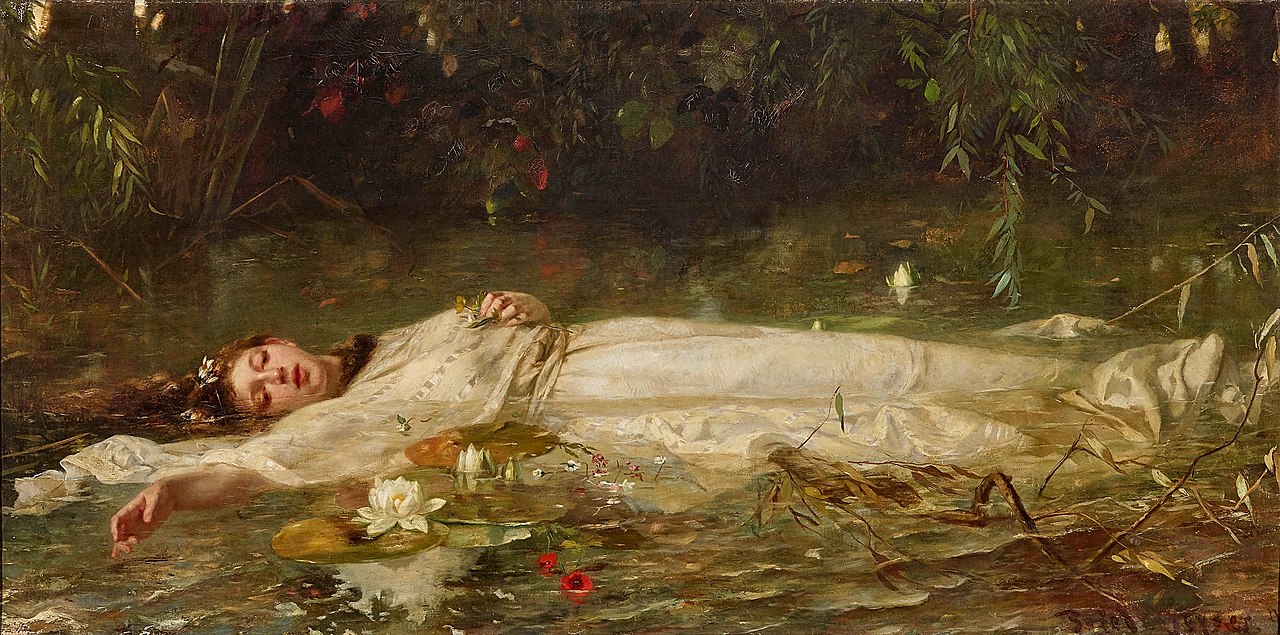
Ophelia by Friedrich Heyser
Millais was a member of the Pre-Raphaelite Brotherhood, which, starting in the late 1840s, highlighted medieval and early Renaissance aesthetics in their work. They pulled from poetry and literature, using vivid colors and an intense realism in rendering their subjects. Swift does not wear the dress that Ophelia wears in either the Heyser or Millais paintings, but it is, regardless, a reference to Pre-Raphaelite art and its influence. She wears a white dress with long, loose sleeves, invoking a medieval aesthetic common among the Pre-Raphaelites. This can be seen in other prominent paintings, such as John William Waterhouse’s Lady of Shalott, or the depictions of women in the work of Dante Gabriel Rossetti. One source of inspiration for the Pre-Raphaelite painters was the Arthurian romances, which is not surprising since they are a quintessential example of British medieval literature and folklore. The Arthurian legends are invoked at another point in the music video, immediately following the first chorus. The scene cuts to Swift at the bow of a ship (or rather, a representation of a ship on a stage). Her hair is now red and worn long, blowing in the artificial wind as stage props imitate a stormy sea. While not confirmed, this may be a reference to the story of Tristan and Isolde. In the legend, Tristan is a knight who is sent to Ireland to retrieve the princess Isolde for his uncle, the king, to marry. Tristan and Isolde fall in love, with their affair discovered by the king. In the end, the king kills Tristan, and Isolde succumbs to grief and dies of heartbreak, not dissimilar to the fate of Ophelia. Some, like Lauren Puckett-Pope and Alyssa Bailey writing for Elle, have commented that this segment may actually contain references to other paintings like William Etty’s The Sirens and Ulysses and Arthur Hughes’s Ophelia (“And He Will Not Come Back Again”). However, this connection is rather weak, as the scene bears little resemblance to either of the paintings. The Ophelia-Isolde connection is not just more evident to me, but far more interesting in its meaning.
Of course, this is not the first time that fine art from centuries past has been incorporated into music videos and other forms of popular culture. By drawing on other art forms, Swift and the video’s designers reinforce the themes the song conveys, creating a more cohesive work of art overall for fans to enjoy.