
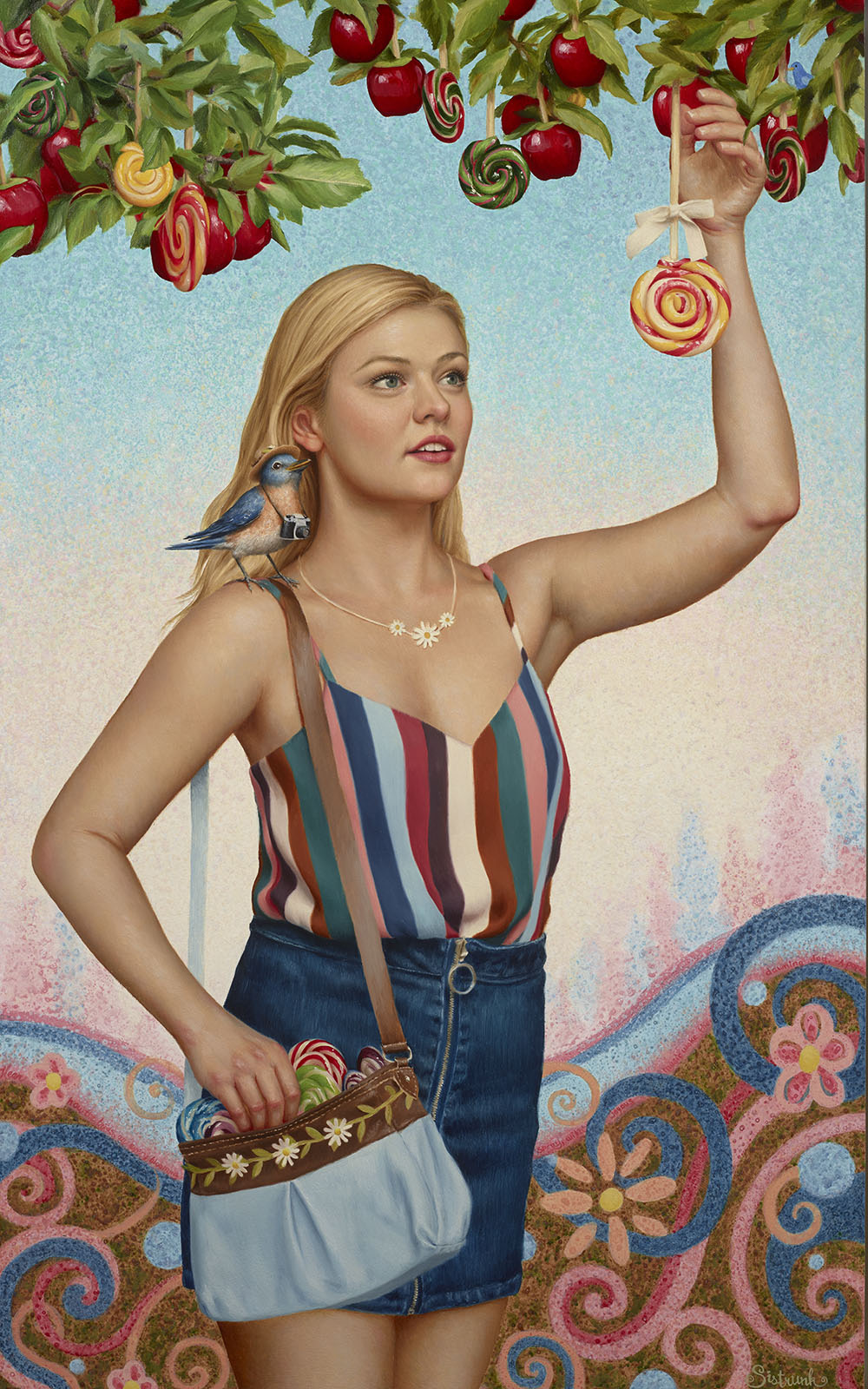
Early Birds by Beth Sistrunk
Food is culture. It’s one of the most readily accessible, tangible expressions of identity that most of us experience. Understanding the food of a culture, a country, or a region is a crucial step in grasping the climate, religion, values, and personality that make each culture unique. And because of this ubiquity, artists have used food as a subject for millennia… and sweet things are often prized above all else.
Historically, sweet things were rare and expensive. Many of the ingredients used in desserts were rather costly, either due to their rarity or the considerable distances they would have to travel to reach you. For example, for a person living in seventeenth-century Europe to buy a handful of sweets, cane sugar would often have to travel from the plantations of Brazil and the Caribbean. Nuts like almonds would have to be transported from the Middle East. Both chocolate and vanilla only came from Mexico at the time. And most spices had to come from India or Indonesia on Portuguese or Dutch ships, traveling 6,200 nautical miles each way by going around the entire continent of Africa. Sweets were a luxury, and paintings featuring them as a subject often did so to show off said luxury. Osias Beert, for example, was a still-life master from Antwerp, a predecessor of Dutch Golden Age painters like Pieter Claesz and Willem Heda. In several of his paintings, he features sweets laid upon a table, including pastries and cookies. However, most interesting is a type of confection he featured in multiple paintings, often known as comfits or dragées. In works like Still-Life with Porcelain Vessels containing Sweets, they may appear like seashells or coral. They are nuts or pieces of dried fruit that have been coated with sugar in a labor-intensive process that produces a hard, sweet shell. Jordan almonds are an example of this sweet treat. Both the process of importing the sugar and the method of applying the sugar shell made comfits a valuable luxury for wealthy Europeans. Other painters like Godfried Schalcken show the luxury of sweets in more personal ways. His painting Young Woman Eating Sweets, made in the early 1680s, shows a girl caught in the act of dipping her finger into a silver bowl of sugar to give herself a little taste. Because of sugar’s rarity and value, sweets were a guilty pleasure, something that household staff like the painting’s subject needed to sneak away to enjoy. Continuing into the nineteenth century, paintings like those of American artist John F. Francis emphasized the elegance and luxury of sweets, whether they be baked goods or fresh fruit.

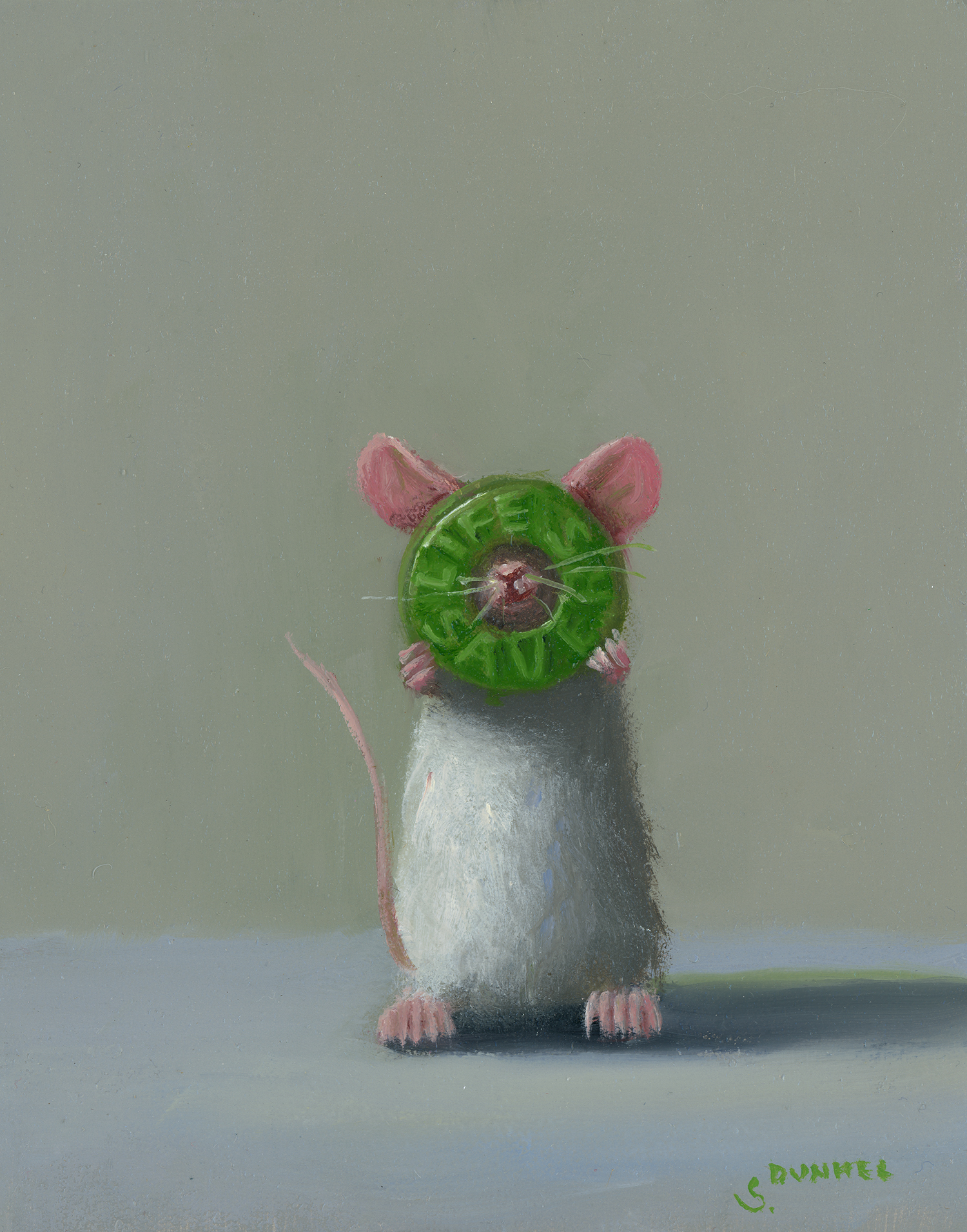
Life Saver by Stuart Dunkel
As the arts entered the twentieth century, production of sweet things became more industrialized, making the products cheaper to make and more readily available for a wider consumer base. While this took the exclusivity and luxury out of some sweets, that didn’t mean they disappeared from art. As sweets became more of a commodity, they became a popular subject for pop artists. Ice cream sundaes like those sold from carts and diners became the focus of a series by Andy Warhol. He also focused on commercially-produced candies and their advertising, namely Life Savers. Wayne Thiebaud became well-known for his paintings of ice cream, cake, candies, and all other sorts of sweets that could be found homemade or in the display case of a bakery. The artists featured in Rehs Contemporary’s Sweet Treats exhibition use desserts and candies for all sorts of reasons, though. The work of Stuart Dunkel, for example, turns the art of still life painting on its head by shifting the viewer’s perspective to that of a small mouse named Chuckie. In his work, macarons become seats, gumdrops become valuable treasure to defend with a toothpick, and a cupcake becomes a tower piled high with frosting. Small, consumable items gain a new purpose when we view them from Chuckie’s eyes. Chris Guest has become known for his figure painting inspired by mid-century pinup photographs. In the works exhibited at Rehs Contemporary, he uses the suggestive nature of his work paired with sweet treats such as lollipops and ice cream cones, creating a juxtaposition that recontextualizes these desserts from an innocent part of childhood towards something more titillating. And finally, the work of the late Beth Sistrunk frequently used sweets and candies to create a dazzling fantasy world where lollipops grow on trees and fence posts are made from ladyfingers. She often used bright, vibrant colors and a variety of techniques to bring this Willy Wonka world to life, almost like an adult version of a child’s fantasy land. Her paintings are also incredibly personal, as she often included self-portraits in her work. While the fantasy elements may pull people’s attention, her skill as a figure painter can often be the hidden secret of her work’s appeal. They also emphasize that sweets are made by and for people. A still-life painting of a doughnut or a bowl of ice cream can sometimes divorce its subject from the important context that sweets are for our consumption.
Sweets are an indulgence. They can provide comfort, symbolize happiness and celebration, and unlock memories of childhood. They can be plain and unassuming or brightly colored and decadent, making them a perfect subject for artists; from crumbly shortbreads to shiny chocolate glazes, dull browns and beiges of cookies and cakes to the vibrant packaging of Halloween candies. Desserts and sweets are more than just foods; they are symbols of indulgence, of love, of consumer culture, and so much more, with artists from Dutch Golden Age masters to the present day using their imagery. And this is one of the reasons why Rehs Contemporary chose sweets in art as the focus of its latest gallery exhibition. Paintings using desserts as their subjects are often lighthearted and whimsical, qualities that are often not taken seriously in the art world and sometimes relegated to the category of kitsch, implying something low-quality, tasteless, or tacky. But lightheartedness should not be seen as unworthy of consideration. Lightheartedness is necessary for us to live balanced, fulfilling lives. So why shouldn’t the art we admire reflect that?
Sweet Treats at Rehs Contemporary Galleries will open on Friday, August 22nd, and run until September 26th.