
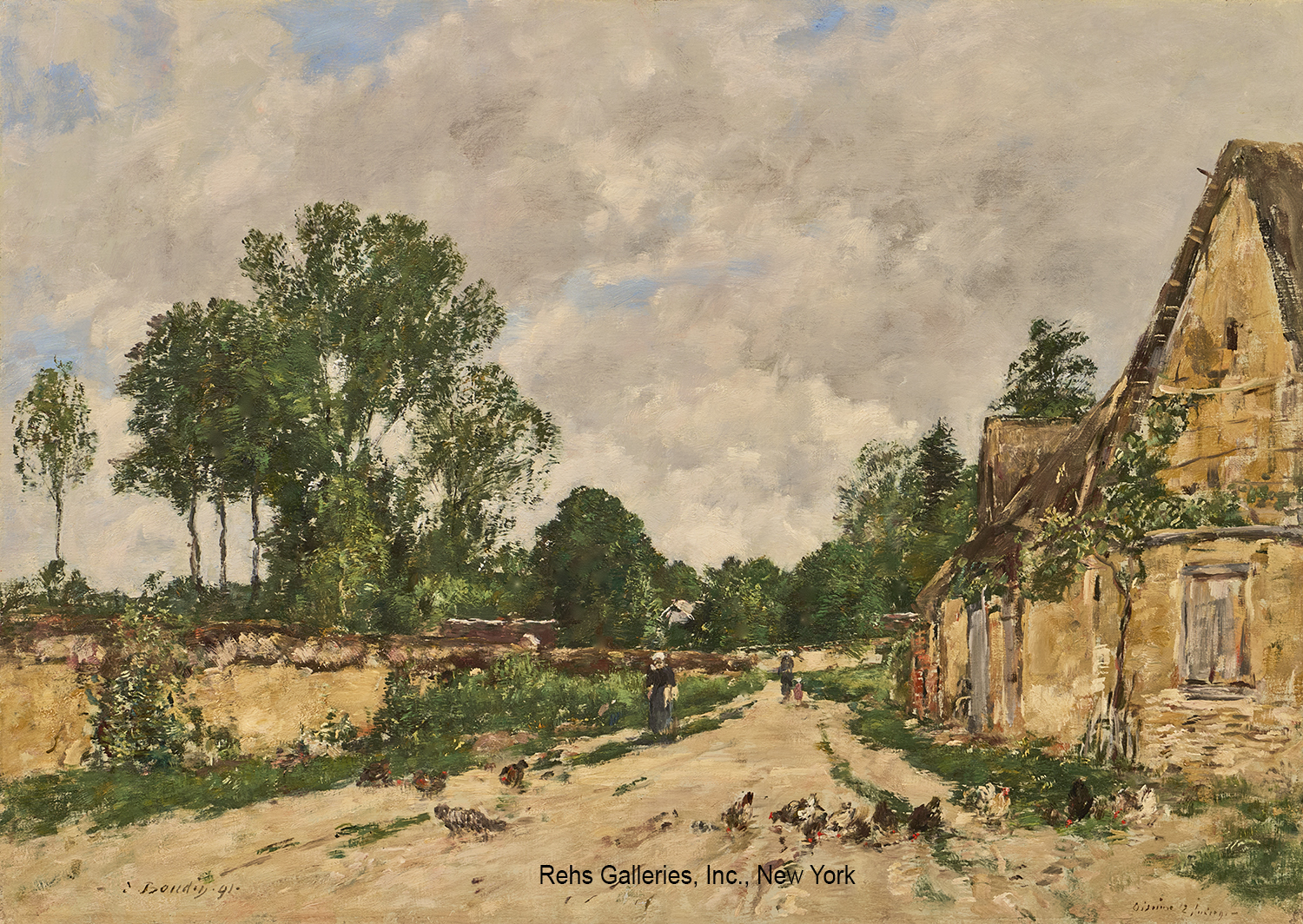
Oisème, Route de village by Eugène Boudin
Oil on canvas
18.1 x 25.6 inches
Eugène Boudin, primarily known as a maritime painter, immortalized the growth of the seaside spots in Normandy from fishing villages to resort towns. His fascination with the coast, whether it’s the bustling port of Le Havre, ships navigating the waters near Trouville, or beachgoers basking in the sun near Deauville, is well-documented. However, his paintings that deviate from oceanic themes are a rare find. Rehs Galleries has recently acquired one such unique piece, offering a privileged glimpse into Boudin’s lesser-known rural landscapes.
Boudin’s 1891 painting Oisème, Route de village shows a country road running through the village of Oisème, a small town located just northeast of the city of Chartres. It is one of three landscapes Boudin created in the area. At the time, no more than eight hundred people lived in the village, with Boudin’s painting conveying the slow pace of late nineteenth-century rural life. The canvas is dominated by the natural greens and browns of trees, grass, the exposed earth of the road, and the clay and stone houses and walls. One or two villagers walk along the road in the distance while flocks of chickens populate the foreground. Despite the difference in subject matter from his more popular work, Boudin employs the same loose brushstrokes that became an inspiration for the Impressionists. Meanwhile, his focus on the daily life of working people echoes the influence of Realist masters like Gustave Courbet. It’s a cloudy day in the country, and yet the scene is bright and warm, rather different from the much cooler grays and blues the artist would employ in his seascapes.