
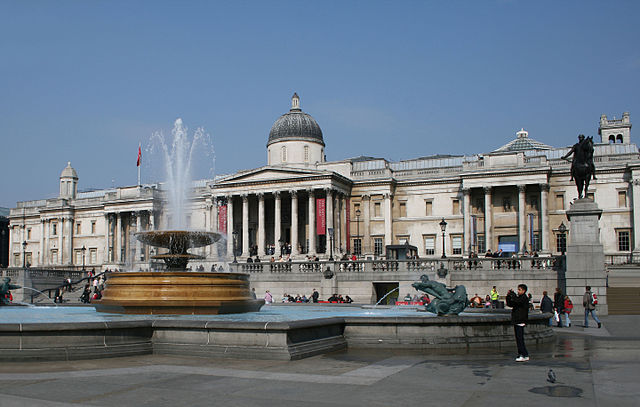
The National Gallery, London
The future of museum administration may lie in a bold move that London’s National Gallery made recently to form a citizens’ panel to allow the public a greater voice in the management of one of Britain’s greatest museums.
With the help of the public participation charity Involve, the National Gallery will select members of the public to serve on a panel it is calling NG Citizens. The National Gallery is not the first museum to adopt this idea, nor the first gallery in the United Kingdom. Other cultural institutions to form citizens’ panels include the Dresden State Art Collections, the Federal Art Gallery in Bonn, the Château de Versailles, the Birmingham Museums Trust, and Nottingham’s New Art Exchange. The National Gallery announced that 15,000 households across Britain will receive an invitation to participate in the museum’s citizens panel. Those who accept will be entered into a lottery to choose fifty people, which will then be narrowed down to twenty. This group will form NG Citizens for the next five years. Its aim is not for ordinary people to have a hand in crafting policy or curating exhibitions, but rather to have a greater influence in shaping the mission and direction of the gallery. “The gallery aims to shape its programmes and priorities around the needs and aspirations of communities across the UK,” an official statement read. These sorts of initiatives are incredibly important, especially in Britain, where both funding and visitorship for most museums have decreased in recent years. The new Labour government under Keir Starmer has made attempts to remedy that, yet many cultural institutions, like small regional museums, still struggle to remain open.
The citizens’ panel assembled by the Birmingham Museum Trust has already submitted its recommendations, which the museum administration has formulated into a five-year plan. In due time, NG Citizens will do the same. Museums need to remain irrelevant to the broader public. The arts can sometimes be seen as a realm for the rich, especially since the elevated cost of living has made the arts more difficult as a profession. But museums are often a key institution in making the art world more accessible. Even though panels like NG Citizens are not permanent bodies, they will doubtless be crucial in ensuring that these museums remain an integral part of their areas’ cultural life. Making these citizens’ panels a more regular aspect of museum governance may hopefully be something we see more of in the future.