
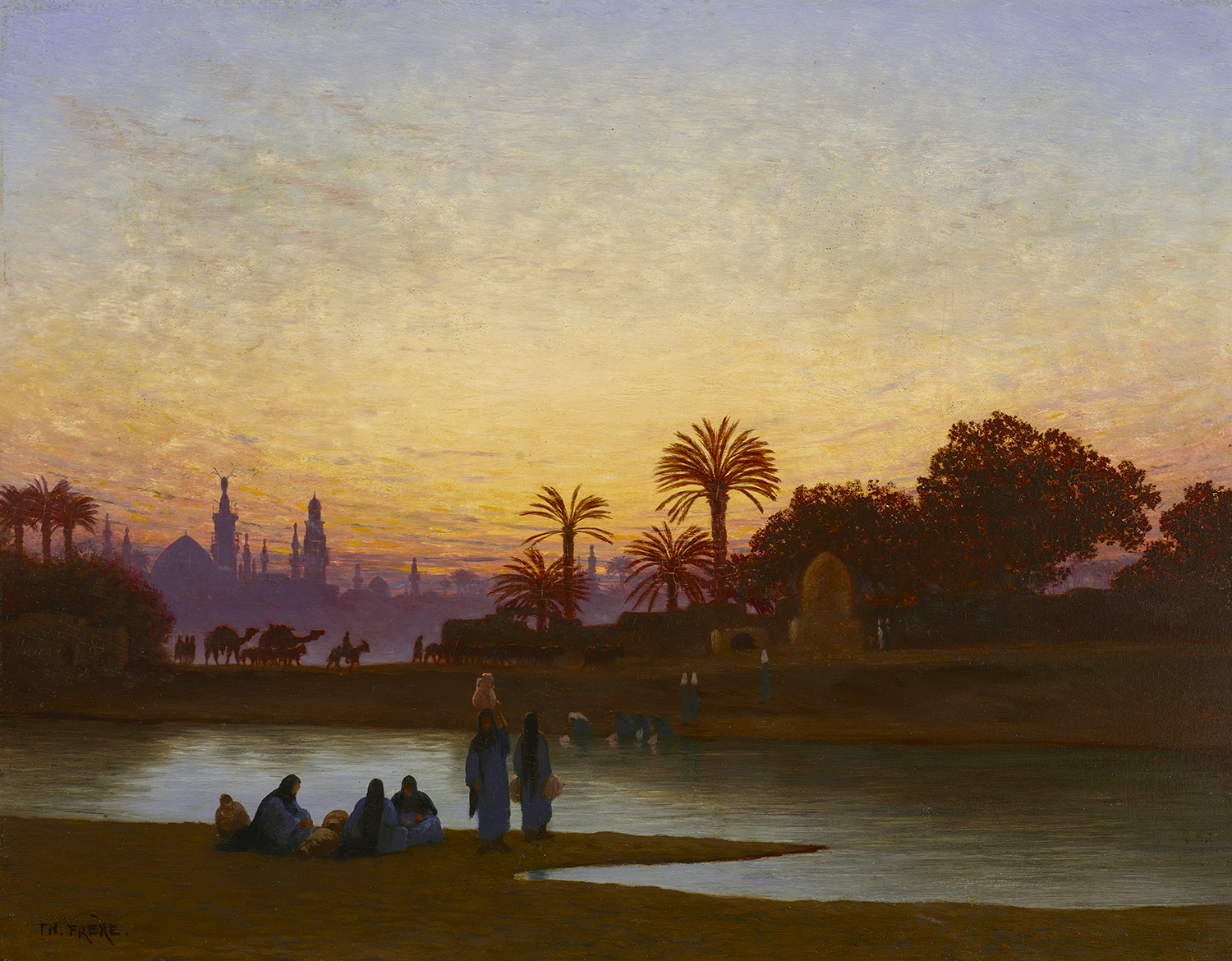
Canal d’Ismaélich (Cairo) by Charles-Théodore Frère
Oil on panel
12.625 x 16.125 inches
As I’ve written before, Orientalist paintings can sometimes prove problematic depending on the subject matter. However, despite the modern stigma against the genre, there are some historical artists whose work continues to endure, including Charles-Théodore Frère, the renowned landscape painter who captured the sun and sands of the Levant and North Africa without resorting to unnecessary exoticization.
Canal d’Ismaélich (Cairo) shows a group of women fetching water from the titular waterway, the Ismailia Canal, just outside of Cairo. The canal was originally dug in the 1860s to provide fresh water to Port Said to facilitate the Suez Canal’s construction. It connects the Nile and a pre-existing series of canals to Lake Timsah, running nearly one hundred twenty miles between Zagazig and Ismailia. Frère shows the canal with the minarets and towers of Cairo in the background, standing out against the setting sun. These sorts of scenes are some of the artist’s most iconic works, with the bright colors of the sun low in the sky rendered in a dazzling, painterly manner. It would likely be impossible to achieve such a strong command over light and color to create such scenes without traveling extensively in the region itself. Luckily, Frère was one of the few European artists who not only visited the Middle East and North Africa but actually lived there for a time, demonstrating his deep commitment to understanding and respecting his subjects. Frère operated a studio in Cairo for about a decade, joining the ranks of other Orientalist painters (such as John Frederick Lewis and Gustav Bauernfeind) who made an effort to better understand his subjects by living among them.